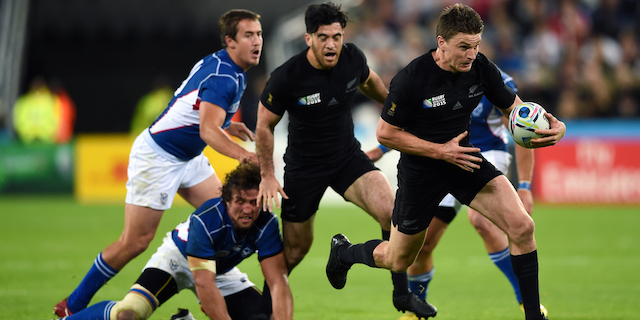
For the casual rugby viewer, the concept of back line play is straightforward. The fly-half gets the ball and passes it along the line hopefully quicker than the defence can drift. This seems to require a traditional attacking line.
But if you’ve been watching the Rugby World Cup closely, you will have worked out that more and more teams are using grouped attacking formations to overload the midfield and increase the chances of gaining yardage on the outside.
England are actually very good at this. Although their attack might have fallen flat at times during the tournament, they did show glimpses of brilliance against Australia from the set piece, as below.
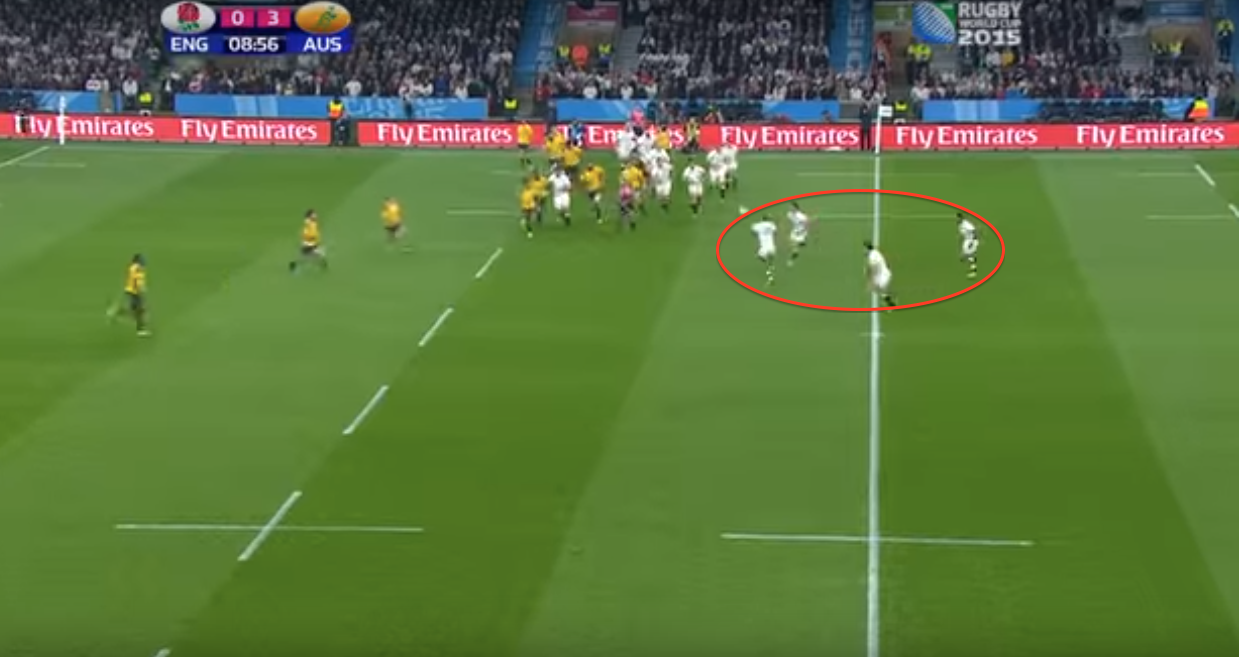
This play led to a big gain for Anthony Watson and it came because they overloaded the midfield and outgunned the Australian defence. Of course, the issues for England then came from the ensuing phases, when players had to start thinking for themselves… but that’s for another time.
To understand why these formations work, imagine salmon swimming up a river. Loads of them will get caught, eaten by bears, jump onto the bank, etc. but there are so many going through the river that at least some of them will survive and make it to the end. Similarly, England throw four men into a narrow lane and Australia simply can’t defend them all.
The next example is from possibly the best try of the whole tournament, the score-equalling effort in Japan’s astonishing victory over South Africa. The picture shows all the possible lines the four Japanese players could run – South Africa have the numbers, they just don’t have the ability to react quickly enough and close down all those options.
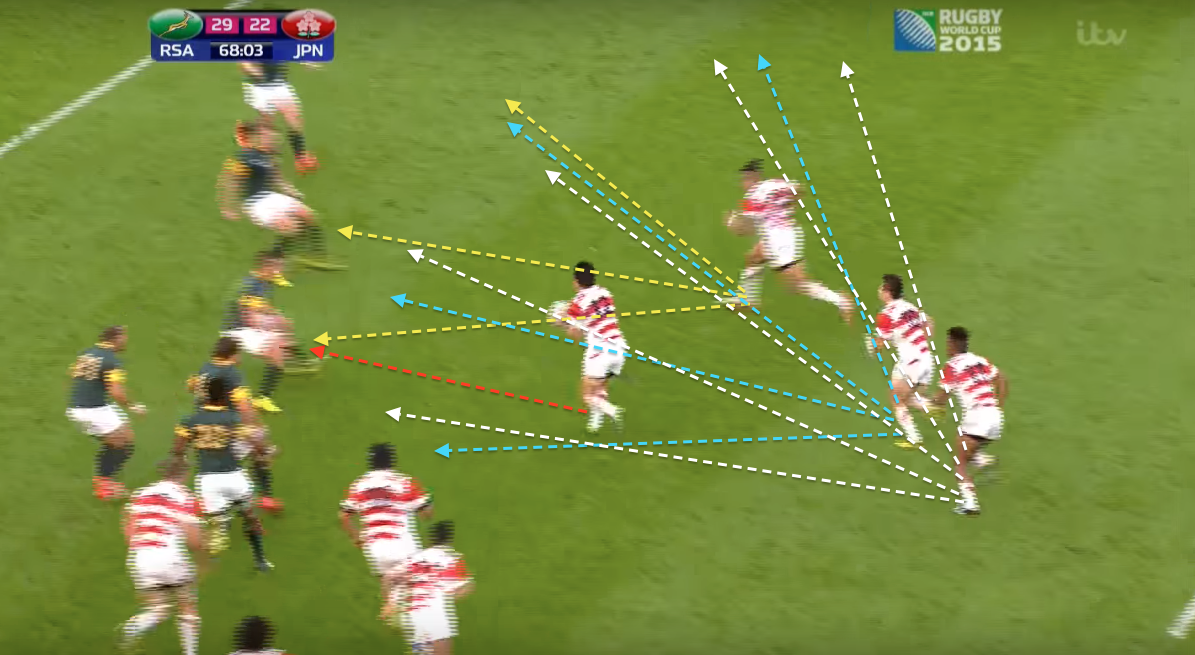
As anyone that has played the game will know, defending isn’t just a case of making tackles it’s also a case of knowing who you’re meant to tackle. The earlier you know who you’re going to tackle the more likely you are to make it successfully. In a stacked attack you don’t have the luxury of time; you just have four different players thrown at you and it’s up to you to make the right decision.
When New Zealand played Nambia, you always expected the All Blacks to have the upper hand but in the below photo the African team have really manufactured their own downfall. It’s easy to look at the picture and say, “Namibian back row needed to drift quicker, let’s move on”.
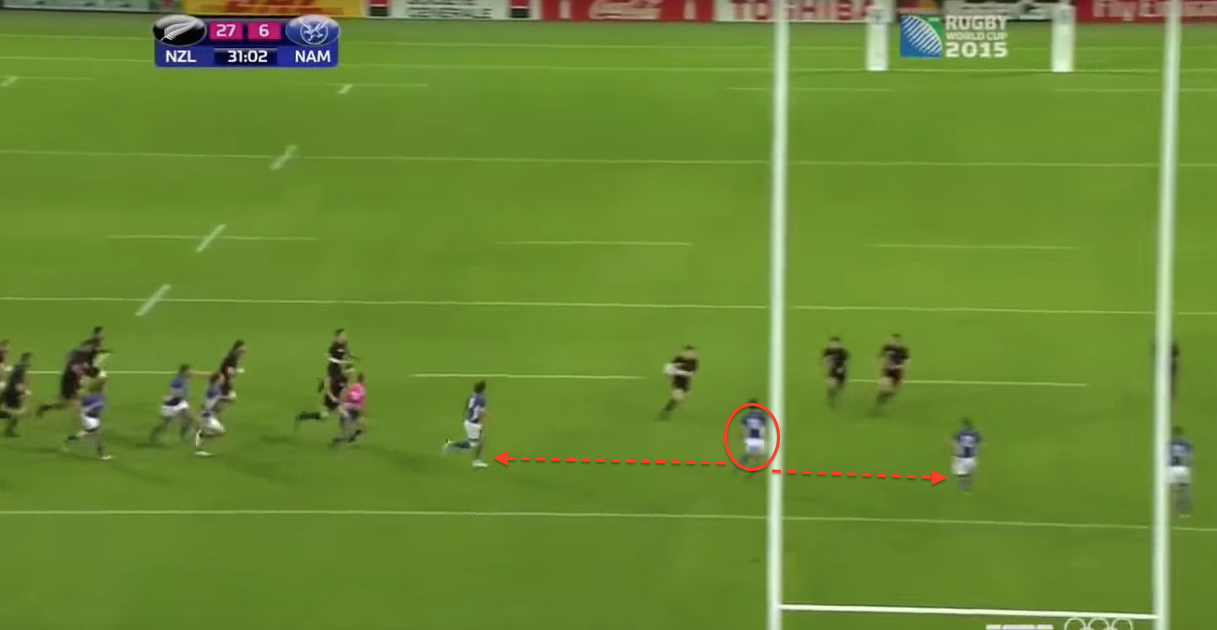
The actual reason for this defensive failure lies in Nehe Milner-Skudder, the player on the left in the two bunched New Zealanders. He comes off his wing and Namibia don’t bring their winger into the midfield and, to stretch the analogy to breaking point, it’s three salmon against one vegetarian bear. Try time.
By Sam Larner (@SamLStandsUp)
Photo by: Patrick Khachfe / Onside Images
The secret to Rugby (not that it is much of a secret) lies in the question what is the best form of defence? The answer being, obviously to attack. As an excellent former coach of mine used to say, catch ball, keep it alive, score try, kick conversion, get 7 points and repeat.
However, to just attack and keep the ball alive isn’t the whole story. Wales are very good at keeping the ball alive and going through phases, but most teams can defend this quite easily as Wales invariably run up one channel, run out of ideas and then kick. (Sometimes it comes off brilliantly, as per Dan Biggar vs South Africa, but invariably most teams can easily defend.)
The real secret is to attack in a way that will either pull defenders in, achieved by overloading at first and second phase breakdowns (which England have been good at, All Blacks are excellent at) or by putting doubt in the place of outside attackers creating space where a concentration of attackers can exploit around the breakdown (as shown in the Namibia example above).
The final payoff from this is when teams can do either option putting in place confusion that often causes chaos, particularly amongst teams that blitz, from first phase, the prime example being Alex Cuthburts complete horlicksing in defence for the winning South African try.
0
At it’s basic level yes rugby is a simple game what sets the great from the good from the downright average is quality execution and this is where the AB’s are streets ahead of their rivals.
As well as the 3 methods of beating a defense outlined above (Kickpass, tie in defenders, attack the fringes) you need to add
* moments of individual brilliance where pace, footwork, an offload, a disguised pass or a well sold dummy allows a player the space to beat his opposite number one on one
* mismatches where a big player bounces off a small player or a quick player rounds a big slow one
0