Four wins from four for England in the Autumn tests sees them through to the new year undefeated. So here are four talking points for English rugby.
A perfect year
First of all – congratulations to England. Victory over Australia means a perfect year: 13 wins to add to that dead rubber against Uruguay last year sees them match the team of 2003’s record of 14 straight victories. A fantastic achievement.
However, the results do need to be looked at with a bit of perspective. First of all, their opposition this year: England have played Wales, a team with real struggles at the moment, twice. They played Italy and Fiji. And they played maybe the worst South African side I have ever seen – a team which recently lost to Italy.
Of course, they can only beat the team in front of them. And they have not all been soft opposition. They beat an Irish team that went on to defeat the All Blacks and, most impressively of all, whitewashed Australia 4-0. Although maybe not one of the great Australian sides, they are still dangerous and brilliant in patches. To win four matches against them does not happen by accident and moments from those matches (the defensive zeal in the second test in Australia, the resurgence in the second half at Twickenham) stand among the best periods of English rugby in recent years.
The point is: as good as the 2003 team? Not quite yet.
They also beat (I think England best performance given the situation) Argentina with only 14 men on the pitch for most of the match. People have said it wasn’t the most dynamic and exciting of victories. But that’s the point. England adapted and changed their style of play to enable them to perform without a blindside winger and nullify a dangerous Argentina team. Which brings us on to the second talking point…
New ways to win
The best teams do not just have one style of play. You only need to look at South Africa with their reliance on sheer size and brute force, or Jamie Roberts trucking it up route one as part of Warrenball, to see that an inability to adapt your gameplan to the conditions, the team and any unforeseen circumstances will ultimately limit your potential.
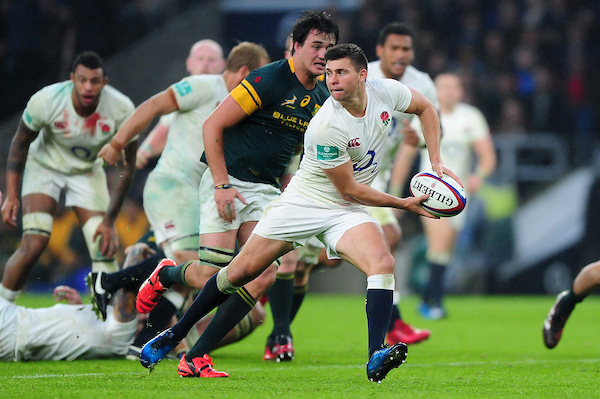
England have shown across this series an ability to play in several different ways. They nullified South Africa’s physicality and struck with precision. They ‘bored’ Fiji at times, refusing to fight fire with fire until it was on their own terms.
And then that Argentina game. Elliot Daly’s moment of madness meant England had to chuck the initial gameplan out with the bath water after five minutes. So they regrouped and kept things tight and simple. They kicked to the corners, played the territory game. Made Argentina run the length of the field if they wanted to score any points. And they came away with the win.
Importantly, England’s opposition now know they cannot just thwart one style of play – play running rugby and England will pin you back and squeeze the game. Play power and size and England will just tackle all day long until you are too tired, when they will beat you with pace and precision. Jones is picking smart players who can outthink their opponents. This is what excites me the most about Eddie Jones’ side.
Small worries
For all the positives and victories, England are still chasing that elusive perfect 80 minutes that Eddie Jones wants. There are a couple of minor worries, namely defensive lapses and the scrum.
In the end, England comfortably beat South Africa and Fiji. However, the two tries conceded against South Africa and the three Fijian scores around the half time break underline their tendency to occasionally switch off defensively.
Eddie Jones brought in the Australian rugby league coach Jason Ryles to combat that exact problem after Jones was less than impressed with his team’s defence and the five tries conceded in the 44-40 third test victory over Australia.
England are still winning, but there is a feeling there are too many ‘soft’ scores conceded. England need to be switched on for 80 minutes defensively, the All Blacks are ruthless and will exploit any opportunity that comes their way.
The scrum is the second slight worry. In the final game against Australia it got better as the match went on, but they didn’t dominate as much as expected and lost one against the head when Hartley failed to hook the ball.
Against Argentina they were ruthlessly targeted (after finally getting our first scrum on 35 minutes), resulting in Cole’s taking a trip to the sin bin and Argentina even having machinations on a penalty try. The scrum is one of the few areas not remotely affected by Daly’s red card, so odd that it should be England’s greatest issue that day.
It is my one worry about Mako Vunipola at loosehead. He has got better there – and is an incredible player in the loose – but he will never destroy opposition scrums the way someone like, say, Alex Corbisiero did. We know Wales and France will target England there, Scotland are no push overs in the tight and with the emergence of Tadhg Furlong, Ireland are finally a genuine scrum threat. England need to sort this one, or they will come undone.
Strength in depth
A final, real positive talking point. England went into the series with the following first choice squad players wounded: Haskell, Itoje, Kruis, Clifford, Watson and Nowell, not to mention openside backups Mike Williams and Sam Jones. Billy Vunipola then went down injured and they also lost Daly and Launchbury to suspensions during the series.
But into that (substantial) void came a resurgent Courtney Lawes and Tom Wood. Ben Te’o and Charlie Ewels got their debuts. Nathan Hughes grew throughout the series and did more than an acceptable impression of big Billy in the final game. Jonny May looked faster than ever. Rokodoguni won man of the match and was still deemed surplus to requirements.
What happens when everyone is fit? Try picking two of Kruis, Itoje, Lawes and Launchbury for your locks. And the back three. The pace of May or abrasion of Nowell, the raw pace and step of Watson or the running lines and monster boot of Daly. How do you squeeze a bit of Roko into the EPS, let alone the matchday 23?
Alongside that Kyle Sinckler showed he is a serious talent to watch, with more pace than a prop should enjoy, and Jamie George means the captain Dylan Hartley is the second-best hooker in England’s 23.
An abundance of riches for Eddie Jones, although I don’t envy his headaches as he wrestles with these selection dilemmas.
What are your thoughts on England Autumn series?
By Henry Ker
I don’t know why your saying Ireland are finally a real scrum threat. Since 2012 Ireland have been pretty good at scrumming.
Really? After reading all of that, that’s the one thing you comment on??
Just correcting the author is all. I’m not sure of his/her nationality but most 6N viewers assume Ireland’s scrum will get demolished by England’s every year based on what happened in 2012 but fail to see that in 2011,2013,2014,2015 Ireland were ontop.
I wouldn’t say Ireland have been dominant scrummagers the past three years but Mike Ross’ late bloom and his uncanny ability to weigh 135kg and still put in a 50 minute shift meant it rarely went backwards. He was a cornerstone, happy to sit steady and ensure Irish put-in became Irish attacking ball, any won against the head was just a bonus.
Furlong is different, he’s less reliable but more dangerous. He’s more likely to try and dominate but also more likely to be penalised or outsmarted because of his effort.
I’m not sure what everyone else thinks, but the scrum seemed to be a bit of a lottery over the autumn. First one team on top, then the other comes back. No one dominant for a whole game. I know subs have an impact on this, but it seemed to happen in game after game involving most teams. Any ideas why this was (or why I’m wrong!) from any front row experts?
Several reasons I think Staggy. Firstly refs don’t usually have a clue what is going on and tend to award penalties on a random basis. Secondly because packs are now so much stronger and heavier that forces within them tend to create collapse. Thirdly, covered stadiums or ones with very high stands tend to have turf with very shallow roots which doesn’t give a good foothold, and most importantly all front row forwards are genetically cheating bastards. If they get done over at one scrum they will often find an illegal way of ensuring that it doesn’t happen at the next one. I just wish they would go back to a straight put in so that the hooker has to strike to win his own ball. The,strike against the head is a completely lost art. The one Hartley lost against Australia was such a crooked feed that it bounced off his knee into the opposition front row.
My 3 main areas to work on would be:
1) Slow starts
Away to Wales in the 6N, for example, the last thing England need is for Wales to get early momentum and the stadium becoming white hot.
2) Soft penalties
Against the Boks this was a main cause of the slow start, we couldn’t get into the game because of a string of needless pens
3) Scrum
Feel it’s a bit harsh to single out Mako alone in this area, OK he’s not a destroyer of scrums like a healthy Corbs, but we seem to have been having more problems on the right hand side of the scrum than the left. Seeing an England scrum on the retreat against Fiji was not an encouraging sign, we are probably the weakest scrum in the 6N with current form and personnel. The ‘finishers’ did better than the ‘starters’ in general, hopefully Sinckler continues his development and can claim the starting jersey and an ability to pick our strongest back 5 will help also.
Anyone else think that maybe Mako is not the issue? Not too many scrums lost when he’s playing for Sarries. Used to be but not anymore.