1. Pragmatism > Beauty
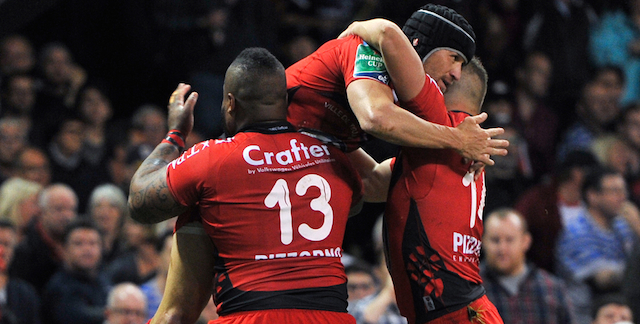
One thing we learnt above all else this weekend – from three of the four results, at least – is that when it comes to knockout rugby, it pays better to be powerful and clinical than daring and inaccurate. Leinster, Saracens and Toulon all came out on the right side of the result despite playing much less attacking rugby than their opponents. They won the game through the power and precision of their packs, and the boots of messrs Madigan, Bosch and Michalak respectively. And this provides the answer to the main question that emerged from the helter-skelter final day of the Six Nations – namely “why don’t teams play like this more often?” In the cold, hard world of knockout rugby, when winning is all that matters, it is more often than not the side that has the greater power – and therefore doesn’t need to chance its arm by flinging the ball around and making more errors – that will come out on top. If teams don’t need to throw caution to the wind because they know they can win by battering the opposition and kicking the resulting penalties, they will do so.
2. The exception that proves the rule
Clermont, of course, provided a counterpoint to the above argument. The manner in which they dismantled Northampton was precise, yes, but it was also immensely entertaining. Brock James, Wesley Fofana, Noa Nakaitaci and Nick Abendanon took the headlines but really to a man, they showed a willingness to play exciting, attacking rugby that was simply much too good for the Saints. Many of the French team, who played so uninspiringly for the lion’s share of the Six Nations, exploded into vibrant life, begging the question: why can they not play like this for the national side? Wesley Fofana, seemingly rejuvenated, in particular epitomises the French rugby problem right now: sublime for his club, disinterested for his country. When it comes down to it, this has to be a problem in management. The players just look like they want it more for their clubs.
3. To the manor born
Any debate about who is England’s best option at fly-half has surely been laid to rest at last. George Ford’s virtuoso performance for Bath in Dublin was so good that it was almost enough to drag Bath over the line on its own. He had a decent supporting cast, of course, with Anthony Watson, Francois Louw and Leroy Houston all keen to attack, but really Bath’s resurgence was all about one man. Identifying mismatches in the line he glided through the Leinster defence twice, on one occasion rounding the fullback without so much as a hand being lain on him and on the other popping a glorious offload for captain Stuart Hooper to score. An argument oft put forth by Danny Cipriani’s supporters is that Ford gets an arm chair ride behind a dominant pack while Cipriani has to impress behind one going backwards. At the weekend Ford proved that he can maintain his attacking instinct even when the forwards in front of him are being battered and bruised.
4. Next generation
If Ford is looking good for this World Cup, there was proof on Sunday that the future will be bright after this year’s showpiece event too. Joe Simpson and Elliot Daly were mightily impressive in a losing cause for Wasps in Toulon. Both possess a devastating top speed and good acceleration, while Daly’s dancing feet and ability to ghost round the outside of a defender make him one of the most dangerous men on any pitch. Their lack of experience at international level means they are unlikely to break into England’s starting line-up soon, although more performances like this could see them into the World Cup squad still. Jonathan Joseph has Daly’s position wrapped up but with Manu Tuilagi an injury doubt there is still hope that he might get a squad place, while Joe Simpson provides something completely different to any other option England have at scrum-half and really should be included sooner rather than later.
5. Same old story?
For the third season in a row, Toulon, Clermont and Saracens are into the semi-finals of elite European competition. Leinster join them this year where Munster had joined them the two years previously, a total of five teams over three years. During the three years previous to that, however, Ulster, Edinburgh, Clermont, Leinster (x3), Saints, Perpignan, Toulouse, Biarritz and Munster had all appeared in the final four of the now defunct Heineken Cup. So while the competition may have been streamlined and given a new name this season, it seems little has changed in terms of where the power lies on the pitch.
By Jamie Hosie
Follow Jamie on Twitter: @jhosie43
Photo by: Patrick Khachfe / Onside Images
6 replies on “European Rugby Champions Cup quarter-finals: 5 things we learned”
Tumbleweed passing – you can hear a pin drop! Nobody is interested anymore.
At this stage of the last ever H.cup there were was 37 comments.
RIP Rugby
DDD
DDD. Just interested why you think it is any different from last year. The 3 stalwarts and A.N.Other Irish province. So same as last year. What were we discussing last year that we’re not discussing this year?
Having said that, I do think that the magic has gone out of the competition, but this is due to a concentration of players resources, making it unlikely that lower spending clubs will get far, not because of the competition itself. The only way to reintroduce the magic is to make it knockout. Never going to happen as the pool games are too lucrative. So we best get used to it!
YEAH – it was shite last year as well – thats why I went back to the last HK.
DDD
Sorryu typo – HC
PS – I’m saying it’s crap and my Leinster are still in it!!!!
DDD
You will probably be able to copy and paste point one when we get to the knock out stages of the RWC!
Staggy
It might be ‘magic’ for you if more English clubs were involved or if 1 had won an H or a Ch. Cup in the last 7, but surely the Northampton game was pretty magical – for the outside observer @ least.