Steve Black started his professional life as a bouncer on Newcastle’s pub scene – which according to some stories involved throwing men through glass doors and having a shotgun stuck in his face.
It is not your traditional route into coaching professional sportsmen, and yet that is exactly where Black finds himself, having helped some of England’s biggest names in many sports fulfil their potential.
In rugby circles, he is best known as the man that transformed Jonny Wilkinson from fresh-faced whippet to the world’s most composed fly-half. In fact, to this day Wilkinson still sounds Black out (Black describes himself as Wilkinson’s ‘mentor’), to get his help on transitioning from rugby to business, and from being a player to being a coach.
 These days Black’s unmistakably Geordie accent has a softness to it, with an infectious chuckle punctuating our chat about his passion since he quit the doorman game: helping professional sportsmen find what makes them tick. His list of clientele makes for fascinating reading: Wilkinson, Joey Barton and, currently, Danny Cipriani are just three that stand out.
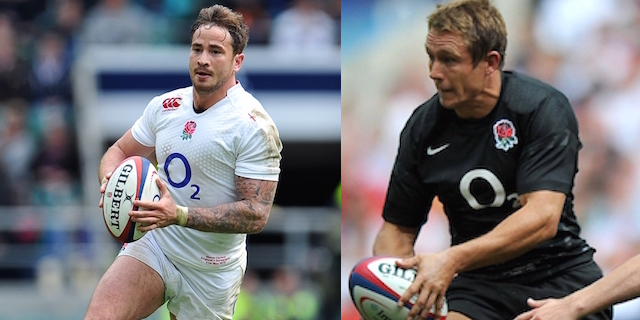
That Cipriani is working with the man that helped England’s greatest ever fly-half is significant. The Sale man has had his fair share of bad press but is playing the best rugby of his career at the moment. And Black has only positive things to say about his newest pupil.
“He’s fantastic. I’ve been with Danny now for three years. He’s diligent, committed to working on his skills. There’s no question about his talent, it’s just about ensuring that talent comes to the pitch on a regular basis.
“Before every training session we ask what he wants to get out of it, and we review afterwards. His consistency has been very, very good. I think he was very unfortunate not to get into the England World Cup squad. When he got a chance in the France game in the build-up, he was superb when he came on. But when he didn’t get the chance he didn’t throw his dummy out; what he did was he re-applied himself, and I’m really proud of him.”
This week Cipriani has again found himself out in the cold when it comes to England selection – he will travel to South Africa with the Saxons, while the first team squad are battling it out in Australia. But it is intriguing that Cipriani appears to have accepted that as his fate and will get on with it, while reports would suggest that Chris Ashton – another former England favourite that has somewhat fallen by the wayside – has rejected the Saxons tour.
Looking forward to touring with the Saxons! An opportunity to play with an exciting group & pull together as a team???? pic.twitter.com/bFhqDl6hEf
— DannyCipriani (@DannyCipriani87) May 24, 2016
While you cannot draw entirely direct comparisons between the two, it is illuminating nonetheless to look at their contrasting reactions. Ashton has probably thrown any chance of returning to the England fold under the bus in the process. Cipriani, no stranger to being thrown under buses of course, has done the opposite. There is no doubt that he is a far maturer player than he was three years ago, and for that Black must take a lot of credit.
Ashton’s club Saracens enter the Premiership final this weekend as favourites to beat Exeter, which would see them lift their second bit of major silverware of the season two weeks after claiming the Champions Cup for the very first time in their history.
They have been the most consistent side in Europe this season, and it is not by accident. Their chairman Nigel Wray talks frequently about what drives them – or more poignantly, what does not drive them: outcome. Rather, they strive to create a positive environment with the right people in it. Do that, and the results will follow, he argues.
The idea that their life should not be solely focussed on winning would be anathema to most professional sportsmen. After all, is that not exactly what they are paid to do? But when you consider the example of Saracens, it is an outlook that makes sense.
“On Monday, when everyone comes back in after the assessment of the weekend, people watching on the outside shouldn’t know whether you’ve won or lost,” says Steve Black. “It should be exactly the same thing.”
It is a fascinating viewpoint, as anyone that has ever played sport at any level will know. When you win, there is always – and I mean literally always – more of a spring in the step during training the next week. When you lose, there is less laughter and often more graft, as you try to right the wrongs of the previous weekend.
Black, who has acted as a sounding board for both Eddie Jones (during his time as Australia coach) and Stuart Lancaster (during his time as England coach), argues this is the wrong way to do things. Identify what your weaknesses and strengths were in any given game, sure, but training should then be approached in exactly the same manner no matter the result that preceded it.
He continues: “Invariably you turn up on a Monday, and if they’ve won at the weekend, they’re happier, maybe there’s a more laissez-faire type attitude, because the focus is just on the outcome. The best way to win is to perform well.
“You play the game, you reflect on it, you take the lessons learned, and then you upgrade your tool box and you move on. It appears to me that maybe, that’s what Saracens are doing. Saracens are committed to improving their performance, so that everyone within the team knows their role.
“One of the crazy things in professional sport is when people say things like ‘oh it doesn’t matter about the performance, it’s just the result’. Do you think you’re going to win many games if you don’t perform well? The answer is no. You’ll win the odd one, but not on a regular basis, and you’re not going to win leagues or big competitions.”
Winning big leagues and competitions on a regular basis is exactly what Saracens are doing. Black may just have a point.
By Jamie Hosie
Follow Jamie on Twitter: @jhosie43
Steve Black was speaking at Canterbury’s ultimate training experience. To find out more about the day and Canterbury’s new training range visit: www.canterbury.com