1. Splitting hairs
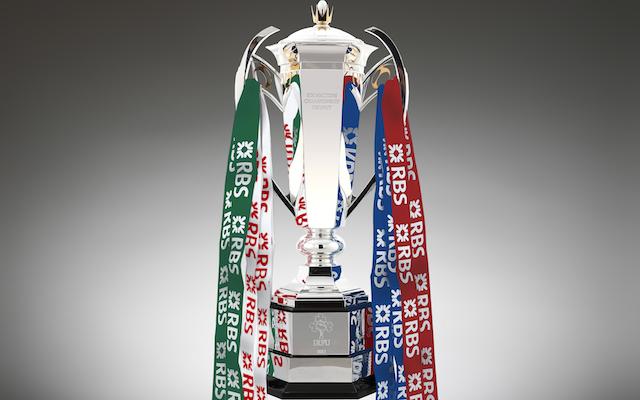
Ireland were worthy Six Nations winners, of that there is no doubt – they were, for the most part, the most clinical side and the way they systematically dismantled most sides before letting loose against Scotland meant they were deserving of a second consecutive title. But had Stuart Hogg grounded that try, or Wales not conceded late on or Owens not blown his whistle against England (we could go on with this list for a while), and had the title subsequently gone elsewhere, no-one could really complain. There is nothing to split Ireland, England and Wales at the moment, as is shown by how obscenely tight the points differentials ended up, and that each side tasted victory over one of the others. Any of the three would have been a worthy winner.
2. Staggered kick-off times must remain
Purely because of the level of drama that entailed, staggered kick-off times must remain. In theory they give the team playing last an advantage, but on reflection it’s tough to know if that is the case. Sure, England knew what they had to do to win the title, but it turned out to be a mountain to climb. Did knowing they had to attack with such gusto from the off lead to them neglecting defensive duties? Conceding five tries to a side that had scored only four in the previous four games would certainly suggest so. Wales started the day just as they were supposed to, throwing down the gauntlet to Ireland and England to pick up. Ireland did so, England fell just short, but the big winners were the fans who enjoyed a full day’s worth of momentum swings. Had the three games kicked off at the same time, we would have had none of the same drama.
3. A bonus point system could work
The big question now is, how do we make these days happen more often? Failing that, how do we ensure teams are encouraged to play with the abandon they showed on Saturday, more often? Essentially, Wales, Ireland and England all knew they would be rewarded for scoring as many tries as possible – which is exactly what the attacking bonus point is for. Why not award a bonus point for scoring more tries in a game? You could even raise the threshold from four. There’s no need to add the losing bonus point as in so short a championship it is winning that matters the most, not consistently losing pluckily (just ask Scotland), but if you lost and still attacked with endeavour, resulting in tries, you would be rewarded and could feasibly still avoid the wooden spoon. Bonus points have not always been everyone’s cup of tea but they are generally accepted these days, and appear in almost every other top level rugby competition worldwide. Why not the Six Nations too?
4. Being clinical is the key
This is the one big lesson that two sides have learnt over the course of the Six Nations, and it was rammed home on the final day. England were within three metres of scoring a try that could have won them a championship that would have been against all odds, but the way they choked when so close to the line was darkly reminiscent of the week previously against Scotland. They left so many points on the pitch that day that in reality, Wales and Ireland shouldn’t have had a sniff. It was that game that lost them the championship, not the France one. Ironically, their opposition that day also need to be taught how to finish properly. It beggars belief how many times Scotland played brilliant rugby to engineer try-scoring chances, only to knock-on or be held up or go off their feet. The lack of ruthlessness – the antithesis of how Ireland play under Joe Schmidt – meant they continue to be on the wrong side of games that, on another day, they could have won.
5. Challengers
The World Cup is now squarely in view and it seems to be coming at a good time for half of the Six Nations sides. There are two clear factions emerging – Ireland, England and Wales at the top, and France, Italy and Scotland at the bottom. All three of the first group can take genuine optimism into the World Cup, and if Ireland look best primed for a proper thrust into the depths of the tournament given their draw, their dire record at World Cups keeps them on an even keel with Wales and England, who will likely face a much sterner potential route to the final. As for France, they at times slipped back into the mould of old against England but still have no idea of their identity, or of what a game plan looks like. They will not have the consistency to get too far. Italy are too one dimensional and will not progress from the their group. Scotland face an uphill battle – the optimism from before the tournament has ebbed away as loss after loss piles up. A chronic inability to win does not a Rugby World Cup challenger make.
By Jamie Hosie
Follow Jamie on Twitter: @jhosie43
Photo by: Patrick Khachfe / Onside Images
14 replies on “Six Nations 2015 Round 5: 5 things we learned”
Without writing a novel you hit the nail on the head….as you seem to do so well.
I’d accept a BP system if it didn’t just reward attacking rugby. I do not understand why that is seen as the goal. So, a BP if you stop a team from scoring any tries, a BP if you score 4. They’d probably cancel each other out in terms of approach and then I’d be left happy with the current setup.
6 nations doesn’t need a bonus point system. If it was to be introduced, it would likely be the traditional format (i.e. try bonus point and losing bonus point). This means that you could win a grand-slam and still not win the Championship! In most years, the championship will be decided by points difference. Teams just need to realise this and start playing more expansive rugby in the earlier rounds.
You CAN’T have a bonus points system when some teams play 3 home games and some 2, it simply isn’t fair. History tells us that England, Ireland or Wales are far more likely to pick up 4 tries at home than they are in Rome or Edinburgh.
Do agree, but why is a BP system unfair in this instance as opposed to a points difference system?
History also tells us that England, Ireland or Wales are far more likely to rack up points at home than they are in Rome or Edinburgh. Surely that argument negatives itself?
Perzactly, you’d be compounding what is an already flawed system.
Why would it be compounding it? Surely it would have the opposite effect.
You could only gain the advantage of a BP, as opposed to +30/40 in the points difference column? Surely gaining the one BP back is a lot easier than have to stick a bunch of points on a side?
In all likelihood I don’t think the home/away advantage would change too much.
Ironically, England’s best chance of a GS is when they have only two home games because of the way the fixtures fall.
The best way I can think to describe it is that the championship is always decided on table points, it’s not always decided on points difference. So something that changes the way those table points are accumulated, which is swayed by where the fixtures are held, fundamentally changes the tournament.
Are we not in danger – just a little bit – of losing sight of what the Six Nations is?
It may be a “flawed system” but unless the teams play home and away then it will always be thus. I don’t actually remember who wins the Championships, although I do recall the Grand Slam Winners.
2 home and 3 away games (or vice versa) will always arouse debate, but it also provides for the traditional quirks, and I don’t see anything wrong with this.
The tournament is about the games themselves, not the fine detail of the points, and this is why it is so popular (or one of the reasons). It won’t become more popular if we start “fiddling” with the points system, it will just become more complicated.
Believe me, I made my way around several pubs in SW london en route to Twickenham on Saturday, and it was an afternoon complicated enough trying to work out points differences, whilst squeezing through to the bars. If we were to add Bonus points into that calculation then I think my headache may have come on far earlier.
Of course, I wish that England had come out on top, but really, I am not overly fussed. To win 4 from 5, like the others, and to miss out by a few points doesn’t bother me. Performance, and the future potential excites me.
I agree. If we’re going to start messing with the system, we may as well go the whole hog – two tiers of 4 teams, with home and away fixtures, bonus points and promotion and relegation. Then we can get teams like Georgia (who are now above Italy in the rankings) and Romania in on the act.
The traditionalists wouldn’t like that one…
Hi Jamie, great Blog.
I think you meant “the antithesis of how Ireland play under Joe Schmidt” not the antipathy. And Wales would not have won the tournament even if they did not concede the late Italian try. (Sorry I am a bit of a pedantic person).
Regards, g.
What I learned…
1. Until Italy find a fly half of even decent premiership quality, they are doomed. Italy would kill to have Freddie Burns, Garret Steenson or Andy Goode. They’ve got the bones of a decent side, though with few standouts. But without a 10, they are never going to be able to win more than 2 games each 6 Nations.
2. Scotland have lost their grunt. Every game I saw they were shunted back at the contact area. Dunbar, Bennett and Hogg can do little when the pack can offer so little consistency. It doesn’t even look like it’s the locks that are the problem – it may be as simple as the front row.
3. With the emergence of Biggar, Wales could a real WC contender. I’ve long held the opinion that Wales were a decent half back pairing away from excellence – Mike Phillips was a great player on his day, but without a good strong fly half his lack of smart decision making was exposed too often in the tight games. Biggar could be the player Wales need to regularly beat SH teams.
4. England’s defensive system is malfunctioning. Time and again Scotland and France were able to get simple overlaps. And yes, I blame the system. Nowell and Watson aren’t the problem. Which is strange, because their close defence with Billy Vunipola, Lawes, Robshaw and Marler is good. something needs to change, or England won’t get out of the group at the WC.
5. Ireland play the plan, are simple and are able to gameplan to make most games tilt their way, even when talent levels don’t. Wales had to play out of their skin to beat them, even with Sexton not at 100% fitness. But take Sexton off the pitch it’s a different team. Ireland need to wrap that guy in cotton wool from now til September.
Agree about England’s defensive system. They seem to be defending very narrowly indeed and its allowing teams to get round them on the outside and make lots of ground before the defense can scramble to bring them down
I think its a deliberate tactic but if so, its wrong. Play as narrowly as that against NZ, or Aus and they will cut us to ribbons
First off, ignore the defence against France – that game was crazy, we were playing so loose because we had to – if we had to win by 6 rather than 26 it would have been a different story.
I think it is by design. In the autumn Australia beat 25 defenders with 8 clean breaks, but we won by 9.