
1. Always admit when you are wrong
This is exactly what Eddie Jones did and look how it worked.
England’s defensive shape was all at sea in Brisbane on Saturday for 25 minutes, and also the attacking threat out wide was being nullified with the greatest of ease by the Wallabies. In short, Eddie Jones’ idea of combating two big centres with one of his own clearly hadn’t worked.
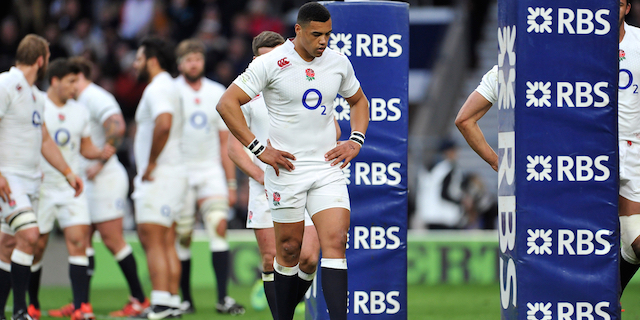
The decision was made and unfortunately for Luther Burrell he was the sacrificial lamb for the evening and was given the shepherd’s crook after half an hour.
The decision turned out to be correct as a rejuvenated George Ford slotted inside Owen Farrell seamlessly to add new dimensions in attack and shore up the leaky defence.
They say big games are decided by big decisions but very rarely is that from the coaches box. Jones made a mistake, admitted it and promptly rectified it.
2. Focus on what you have and not what you have lost
Joe Schmidt must have had his head in his hands after the Pro12 season as one experienced international after another declared themselves unfit for the tour to South Africa but as it turns out, the guys who have been waiting patiently in the wings maybe need to take centre stage more often.
It was certainly backs to wall stuff for large parts of the game following CJ Stander’s much debated red card but what was refreshing to see from Ireland was how they varied their game and played with such attacking intent when they had the chance.
Paddy Jackson taking the reins from Jonny Sexton is the perfect example. Fewer high balls, fewer set moves and more heads up rugby from Jackson allowed exciting and imaginative players like Jared Payne and Luke Marshall to play off-the-cuff. Payne’s try personified this.
Irish fans will be waiting expectantly this weekend for a repeat performance.
3. Wales need to stick to Plan B
Many a rugby fan has been left frustrated in the past season or two by the lack of imagination in Wales’ attacking mind-set. The main frustration has been that they know there is a glut of very talented ball handlers and runners that could be let loose – we have witnessed it in so many games – but often too late in the day to make an impact on the result.
Saturday that all changed for 40 breathtaking minutes. Instead of ploughing Jamie Roberts through the middle to draw people in, Wales used players like Liam Williams to make Ryan Crotty and Malakai Fekitoa look distinctly vulnerable against pace.
Hallam Amos and George North were involved everywhere, the latter causing problems every time he was on the ball.
In short, Wales went out there to try and beat the All Blacks and not just to not lose. They are good enough to believe that they can as well. It was the fitness levels that let them slip away eventually but they should take this attacking ethos into the next chapter of this tour.
4. Coetzee’s Springbok is badly wounded
Allister Coetzee must be wondering what he has got himself into. The Baby Boks lose in the U20 Championship to Argentina and his ‘A’ team then lose to the Saxons as well – so surely his most senior of players will stand up to be counted for him?
This was most certainly not the case as they failed to control the game let alone even think about dominating it against 14 men as his most senior players failed to step up and take charge.
You could reel off a who’s who of players that let him down on the leadership front but Adriaan Strauss was certainly met with a baptism of fire as captain, and usually unflappable Francois Louw was substituted very early in the second half as he toiled against the Irish back row.
The word ‘transition’ is now likely to become stock in the vocabulary of the South African Rugby Union but it looks to be a deeper lying issue than that.
5. Smith and Nonu the biggest loss
The post McCaw and Carter era needs to be renamed to reflect the hole left, both metaphorically and literally, by the international retirements of Conrad Smith and Ma’a Nonu.
New Zealand are notoriously a bit rusty in the first test of a series, but it was quite clear that there was more than a bit of rustiness in their midfield at the weekend.
Individually, Ryan Crotty and Malakai Fekitoa are having good Super Rugby seasons, but the gaping chasms that the Welsh back line waltzed through on Saturday will have had Steve Hansen calling for some repair work.
The biggest issue was the lack of a distinct leader in defence. Smith used to run the defensive line with Nonu being guided around the field to smash people when the leash was loosened, but neither Crotty nor Fekitoa looked to be in charge at any stage.
Wales will look to exploit this wound, whilst New Zealand will spend the week trying to stitch it back up.
6. Silence is golden
The way that the Northern Hemisphere teams have reacted to their success at the weekend has irked the locals more in the South greater than any victory parade could possibly have.
It was level headed, there was no fanfare and the underlying message was that we respect the opposition and there is still a big job to do.
Wales ultimately came up short after talking the game to the World Champions, but England and Ireland’s wins, in the past, would maybe have been blown out of proportion.
It is a sign that the Northern Hemisphere teams don’t believe that the gulf in class with their Southern counterparts is as big as the media like to hype it up to be, but also that they won’t be drawn into constant goading, especially from Down Under, of past glories being rubbed into their faces.
Wales know that the All Blacks will get better and England will also not be naïve to the fact that Australia are historically close to perfect in second tests of a series. Ireland will do well to remember Ian McGeechan’s famous speech of 1997 and be wary of the wounded Springbok as well.
‘Carry on as normal’ will be the message, and let the SANZAR nations continue to argue between themselves.
By Andy Daniel
Follow Andy on Twitter (@scrum5ive)
 As you know by now, we are hilarious, and you should be following us on Facebook and Twitter.
I can’t recall a coach making a better tactical substitution then Faz for Burrell. And to replace him with a 10 who covers 12, I did not expect this to have such a dramatic (or even positive) impact
…. well it shows me I know even less than the little I thought I knew!
Don’t know much about Ben Te’o, but I would say let’s stop worrying about looking for an inside-centre. We already have the best English-qualified inside centre available. Farrell is easily tough enough and offers so much more over and above that, not least reliable goal-kicking.
Or maybe having a bosher for the first 30-40 minutes to then transition into the more subtle and creative Ford/Farrell axis could be a good template. After all, let’s not scapegoat Burrell too much – yes he was caught out a couple of times in defence but he did some decent work too.
I don’t think it was just Burrell’s fault although he was no doubt too narrow on occasion and could have made more effort to get to Hooper
It was more the defensive coordination and communication that improved massively once Farrell moved to 12. For the first couple of tries England were far too close to the rucks and forwards were caught in the defensive line too much. The first try came from Folua realising that he was up against Mako Vunipola and making the most of it. I might be wrong but I wouldn’t have thought Burrell was the defensive leader before he went off.
Also worth noting that the problems didn’t entirely stop when he left either. For Hooper’s second try, the Aussie back line when the ball came out from the ruck was Foley, Lealifiano, Kerevi , Folau and Hooper. They were faced by Haskell, Cole, Hartley, Kruis and Watson – no wonder they scored with relative ease!
If England are going to won again they need to make sure the defense isn’t so narrow and that Aus don’t engineer situations where players like Folau are running at props.
BTW have just seen the result of the Wales Chiefs game..
What did change dramatically was line speed, there was no effective blitz so it was too easy to move the ball wide.
Not the only issue that needs fixing before Sat, but I do believe we would have lost without making the switch.
As bad a Burrell was, and he was very poor, I don’t necessarily think it means we should always play with two playmakers.
For this particular game, with both Aus centres being fairly one dimensional, it made sense.
What I like about what Jones is trying to do is that he is creating a squad that are flexible. We should be able to play with one playmaker in midfield or two, and the players should be intelligent enough to change midway through a game.
Something SL was never able to install was that feeling that England could be flexible and change tact midway through a game, whereas Jones seems to be breeding an England squad that are actually able to think on their feet during a match.
7. Wales fixture secretary should be fired. After a tiring fast paced 80 minutes against the best team in the world half the team are supposed to fire themselves up for a mid week game and then do it all again on Saturday. I’m not surprised they got beat (slightly by the margin) and I fully expect those tired players to under perform on Saturday which means they are in for a tonking.
Yes, the substitution changed the course of the match. Without it, we would have had a rerun of the World Cup debacle, with England losing by 30 points or more. Even with the substitution we were lucky to steal it. There was nothing much wrong with Foley’s disallowed try. And we can’t expect him to goal kick like a man in a blindfold again. Nor can we expect the ref to be as indulgent of Dan Cole & our scrummaging next time. Not with all the allegations of bias. The Aussies may be one match down but methinks they will still take the series.
There was nothing wrong with Foley’s try – apart of course from the obstruction by Arnold.
As for Cole’s scrummaging, there’s been nothing wrong with it. Sio over-extends his feet and his weight is too far forward to keep his balance. It was a problem of his against Nel in the RWC and has been a problem in Super Rugby as well.
The Aussie media are trying to do what they successfully managed against Marler – use a social media campaign to affect the on-field refereeing and nullify what is a strength for England and a weakness for them.
The fact that Cheika has dropped Sio from the entire squad suggests that he thinks the refs won’t be influenced this time
The obstruction from Arnold – exactly. I don’t get some of the commentary that’s floating around about this, Barnes was even banging on about it in the commentary in suggesting that it shouldn’t have been obstruction as Burrell would not have made the tackle… as far as, obstruction is obstruction and should be penalised, the speculation is of an unknown outcome is irrelevant.
There was one big thing wrong with Foley’s try and that was the blatant obstruction of Burrell. If Arnold hadn’t actually made contact with Burrell it may have been different, but he actually runs into him blocking his path to tackle Foley.
Saying that I don’t think Burrell would have tackled Foley anyway as he didn’t seem too interested in tackling.