
As pre-season training gets into full swing, The Rugby Blog spoke to Gloucester Rugby to find out more about nutrition for rugby.
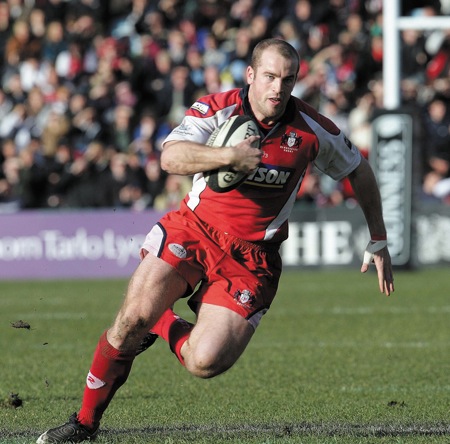
Rugby players seem to be getting bigger, faster and stronger and to be able to keep up on the field, the modern player has to keep up off the field as well.
Weights and fitness training have always been an integral part of the rugby player’s schedule, and now an effective diet and nutrition plan is also seen as an essential component of preparing for rugby.
Indeed, Mark Bitcon, Gloucester Rugby’s Head of Sports Science, says that rugby nutrition is at least 50% of his players’ preparation. He insisted, “Making sure that you’re getting the right macro- and micro-nutrients is vital. We train hard to get a muscle adaptation afterwards, and if you don’t get the right nutrition, you won’t get that adaptation.”
When we exercise and lift weights, damage is done to the muscles. The change or growth comes in the recovery period, and our bodies need protein to help repair that damage and assist in lean muscle development. Due to the contact nature of rugby and the high strength and power requirements, players require a higher intake of protein compared to non-players.
Bitcon added, “We are well into pre-season training at the moment, and the players are lifting weights five, six or seven times a week on top of regular rugby sessions. They need to eat a lot of protein to help with that recovery, ensure they are fully hydrated and they need to keep their calorie intake up to ensure they have enough energy to train.”
“During the season, we’ll only lift weights two or three times at the most and then do a couple of rugby sessions, so the nutrition requirements are slightly different and we have to adjust to that. The calorie intake will drop as the intensity of training drops, but we’ll keep the protein levels high to help with recovery after matches.”
“We use supplements to help control what the players are taking in, because you know exactly what is going into the body. A protein shake is a great way to increase the protein intake immediately after training. We’ll have a high-protein meal not long afterwards, but the shake is an easy way to give us a boost.”
Getting your nutrition right on a matchday to ensure maximum energy levels and peak performance is also critical. A balance of low glycaemic carbohydrates – which slowly release energy into the body – and more protein is key, according to Bitcon.
“We’ll have a breakfast of animal protein like chicken or fish, as well as carbohydrates like scrambled eggs and beans. Most of our games are at 3pm, so we’ll eat again before the match with a smaller meal with more chicken or fish and a protein shake.”
During the rugby season, players have to perform at high intensity, week in and week out right through to at least March or April, so nutrition for rugby is very different from other sports where you might build up to a big performance two or three times per year.
“The rugby supplements we take give us so much control over what our players consume, and they do just that – supplement a good diet. We mainly use a product called Twister from Sci-Mentor Nutrition which is predominantly protein with an element of creatine. Other than that, we use a lot of whey protein and plenty of Omega-3 as well.”
For more information on the products used by Gloucester Rugby, visit www.sci-mentorrugby.com.

continuously i used to read smaller articles or reviews that also
clear their motive, and that is also happening with this
paragraph which I am reading now.
Great information. Lucky me I ran across your site by chance (stumbleupon).
I’ve book marked it for later!
magnificent post, very informative. I ponder why the other
experts of this sector don’t understand this.
You should proceed your writing. I am sure, you’ve a
huge readers’ base already!
my website – Key Preisvergleich