
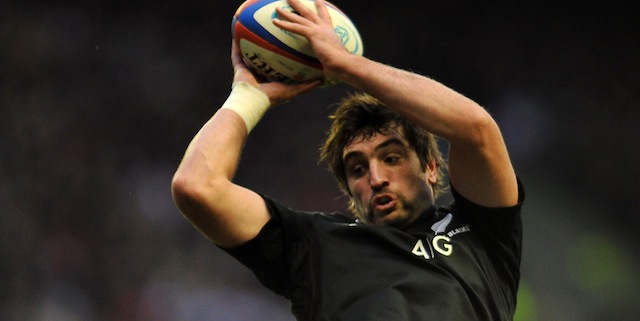
15. Willie le Roux (South Africa)
Fullback is a position in which there is a staggering amount of talent in world rugby right now, so to say that le Roux is the most exciting and dangerous of them all is some praise indeed. He was as dangerous as ever with ball in hand this championship, but also picked his moments to attack intelligently and combined them with an excellent tactical kicking game. Israel Folau was good in fits and spurts for Australia, but didn’t consistently live up to the astronomical standards he has set himself.
14. Cornal Hendricks (South Africa)
South Africa’s latest arch-finisher. His combination with Bryan Habana and le Roux leaves South Africa with devastating try-scoring potential in the wide spaces and no little pace. Finished second top of the scoring charts with three.
13. Tevita Kuridrani (Australia)
Comfortably Australia’s most menacing back in what was a remarkably blunt attacking unit, given some of the talent they have to work with. A hard, direct runner with good distribution skills, he was one of the few Wallabies to come out of the championship with his reputation enhanced. Mention to Conrad Smith, who as usual got stuck into the less glamorous stuff to allow those around him to make the headlines.
12. Jean de Villiers (South Africa)
Truth be told, it wasn’t a vintage tournament for inside centres. Nonu was fairly anonymous when he wasn’t injured, Toomua did very little of note and while Hernandez showed flashes of brilliance, he was, for the most part, average. Step up, then, Jean de Villiers – an inspirational leader and still a world class centre. Capable of picking lines that defences simply cannot deal with, he was rewarded with a brace of important tries.
11. Julian Savea (New Zealand)
There’s not much more to be written about Savea. Whether he is better than Lomu was or not is irrelevant – he is comfortably the best finisher in the world right now and can do things with a rugby ball in his hands that mere mortals can only dream of. Unsurprisingly finished top try-scorer with four for the tournament.
10. Nicolas Sanchez (Argentina)
The only fly-half to play the entire championship, and to do so consistently well. He was a revelation for Argentina, leading his side to the brink of victory a couple of times before they finally got the monkey off their backs in Mendoza. A danger on the gainline and an intelligent kicking game. Cruden and Pollard came close but the former let himself down off the pitch and the latter showed too much naivety at times on it.
9. Aaron Smith (New Zealand)
It wasn’t a vintage tournament for scrum-halves, but Smith was an ever-present who never let his side down. Zippy service and well-directed box kicks were the order of the day most of the time, with a few darting snipes around the fringes thrown in for good measure. Job done.
1. Wyatt Crockett (New Zealand)
With Tony Woodcock unavailable Crockett really took his chance to impress the All Blacks’ selectors with an impressive scrummaging championship against two of the best units in the world (no, not you Australia). Doesn’t offer a great deal in the loose, but given the mobility of the rest of his pack, doesn’t need to.
2. Agustín Creevy (Argentina)
Will go down in history as the man who led Argentina to their first ever Rugby Championship win. They probably deserved one earlier this championship, too, after coming nail-bitingly close against both South Africa and Australia. Their hooker was galvanised by the captaincy, transforming into twice the player he was beforehand.
3. Sekope Kepu (Australia)
It feels oddly dirty to include an Australian prop in the front row of the tournament, and while Kepu’s scrummaging wasn’t as good as Herrera or du Plessis at times, he at least lived with the more-vaunted scrummaging units (for the most part). Where Kepu earned his stripes was in the loose, tackling like a madman and carrying to good effect.
4. Brodie Retallick (New Zealand)
The undisputed best lock in the world. Unfeasibly mobile and flexible for a man of his size, with gorgeously soft hands and an ability to offload that most backs would be proud of. Not afraid of the grunt work, either, as several key interventions in the contact areas prove.
5. Sam Whitelock (New Zealand)
Doesn’t get the headlines that Retallick does but is still an integral part of the All Blacks’ game. The man responsible for the line-out, he also got through an incredible amount of work, finishing joint top of the tackling stats for a lock with 56 for the championship. Mention to Victor Matfield, with whom Whitelock tied for tackles made, a man who continues to defy his age.
6. Marcell Coetzee (South Africa)
Started the tournament slowly but really came into his own after moving into the number six shirt (openside in South African numbering). A true warrior at the breakdown, and a workhorse around the park – second only to McCaw in tackles made.
7. Richie McCaw (New Zealand)
Top tackler and second in the try scoring charts, it was quite a championship for McCaw who responded to some critics that claimed he was on the decline after a (relatively) average Super Rugby campaign. Still a great leader. Michael Hooper came very close and matched McCaw for tries scored (and very nearly tackles made), but comes a distant second in the leadership stakes.
8. Duane Vermuelen (South Africa)
Almost had to toss a coin between Vermuelen and Kieran Read. In the end Vermuelen sneaks it after his game-changing stint against Read and the All Blacks in the final round. He carried with menace throughout the tournament and was certainly the most threatening forward to defences. A real contender for player of the championship.
By Jamie Hosie
Follow Jamie on Twitter: @jhosie43
Photo by: Patrick Khachfe / Onside Images
